
Fleming Criminal History Checks
Start a Fleming criminal history inquiry with the document itself. A citation, report heading, case number, or receipt often names the custodian. That detail matters in Fleming because the town website does not advertise a police records unit, arrest blotter, local jail, or public municipal case portal. Town Hall can route ordinance and town-document questions. The Logan County Sheriff handles records created by county deputies, the jail answers custody questions, Logan Combined Courts holds state criminal cases, and the Colorado Bureau of Investigation maintains statewide fingerprint-supported criminal history.
- Ask Fleming Town Hall which town officer or municipal court clerk holds an ordinance citation or town record.
- For a county-law-enforcement event, submit the Logan County Sheriff records form by email or through the records counter.
- Call the Logan County Jail line and select option 2 when present custody or booking status is the issue.
- Use Logan Combined Courts for filed misdemeanor or felony documents and the case disposition.
- Run the official CBI ICHC name check when the goal is a broader Colorado history rather than one Fleming incident.
Each result answers a different question. A sheriff narrative describes an alleged event. A jail record shows intake and initial charges. The court file shows what prosecutors filed and how the case ended. CBI links fingerprint-supported arrest cycles to reported outcomes, but its public output is not a police report or live warrant check.
Fleming Town Hall Records
Fleming's official town site identifies Town Hall at 114 N. Logan Avenue, Fleming, Colorado 80728. The listed telephone is 970-265-2692 and the fax is 970-265-2170. These are the verified local contact points for a town-code, ordinance, notice, or municipal-custodian question. Ask who holds the exact record and how the town currently accepts requests before sending payment or personal documents.
The town calls Fleming “One Small Part of a Great Nation.” Its site links resident services, parks, a library, town code, notices, and local communications. Those civic resources help identify town action, but they should not be described as a criminal-record database. Fleming’s modest scale makes a direct call useful when a web page does not name a clerk, fee, hearing date, or copy method.
The official town homepage supplied the source image below. It shows the municipal channel that Fleming residents should use before assuming a county office owns a town document.
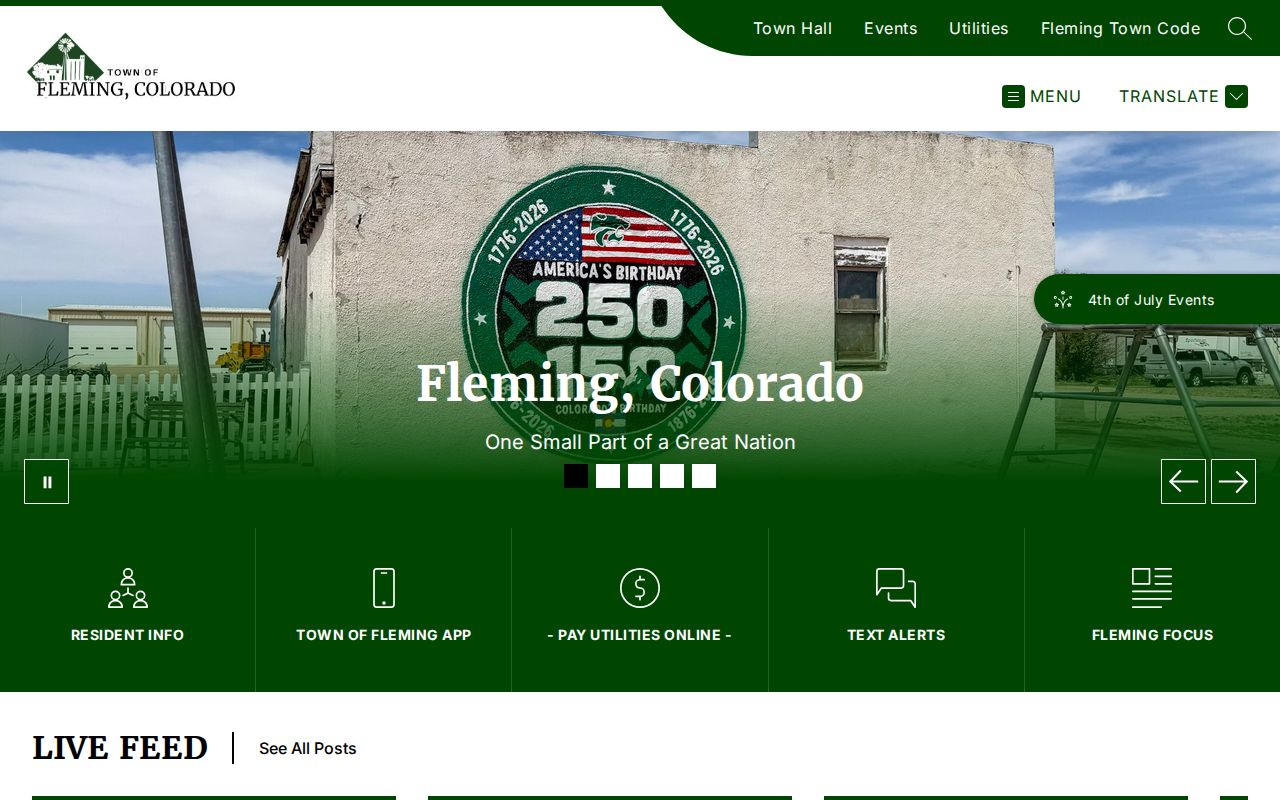
That local starting point preserves an important distinction: town notices and municipal files are not the same product as sheriff reports or Colorado criminal history.
Records at the Fleming Police Department
No verified source in the research identifies a standalone Fleming Police Department, a Fleming police database, or a separate local booking facility. The heading reflects the office readers may expect, but the research confirms no such town department. Do not direct a requester to an office that may not exist. Instead, check the agency name printed on the incident report, citation, property receipt, or court notice. If a Logan County deputy created the report, the Sheriff’s Office is the correct custodian. If another agency handled the matter, that originating agency keeps its own narrative.
CBI also tells requesters to seek an arrest report from the arresting agency. A statewide name result cannot supply the deputy’s narrative, witness statements, evidence detail, or every protected attachment. This custodian rule prevents wasted requests and explains why a Fleming event can require more than one official channel.
Fleming App and Text Alerts
Fleming links its own iOS and Android app, text alerts, and the Fleming Focus publication from the town website. These channels can carry municipal notices and resident information. They may help a reader learn of a meeting, closure, or town update, but the research does not establish an inmate search, warrant search, police blotter, or criminal case lookup inside the app.
Treat the app as a notice channel. For a record, contact the named custodian. This distinction is small but useful: an alert can point to an event, while the official file remains with Town Hall, the Sheriff, the jail, or a court. Never infer that a mobile tool exposes protected case material merely because it belongs to the town.
Booking and Arrest Records in Fleming
A Fleming arrest involving county custody routes to the Logan County Jail at 110 N. Riverview Road in Sterling. The official county website does not provide a searchable public jail roster. For a current custody question, call 970-522-2578 and select option 2. That call can address whether a person is held locally, while a records request can seek releasable booking material. Jail information does not prove that prosecutors filed the same initial charge.
The arresting agency keeps the event narrative. The jail creates intake data such as booking time, identity fields, fingerprints, initial charges, holds, bond, and custody status. Logan Combined Courts later holds the filed complaint, hearing entries, orders, disposition, and sentence. Readers seeking deeper county-level arrest channels can use the Logan County arrest search without treating the booking entry as a conviction.
The Logan County Sheriff page is the source for this image of the county law-enforcement channel serving Fleming.
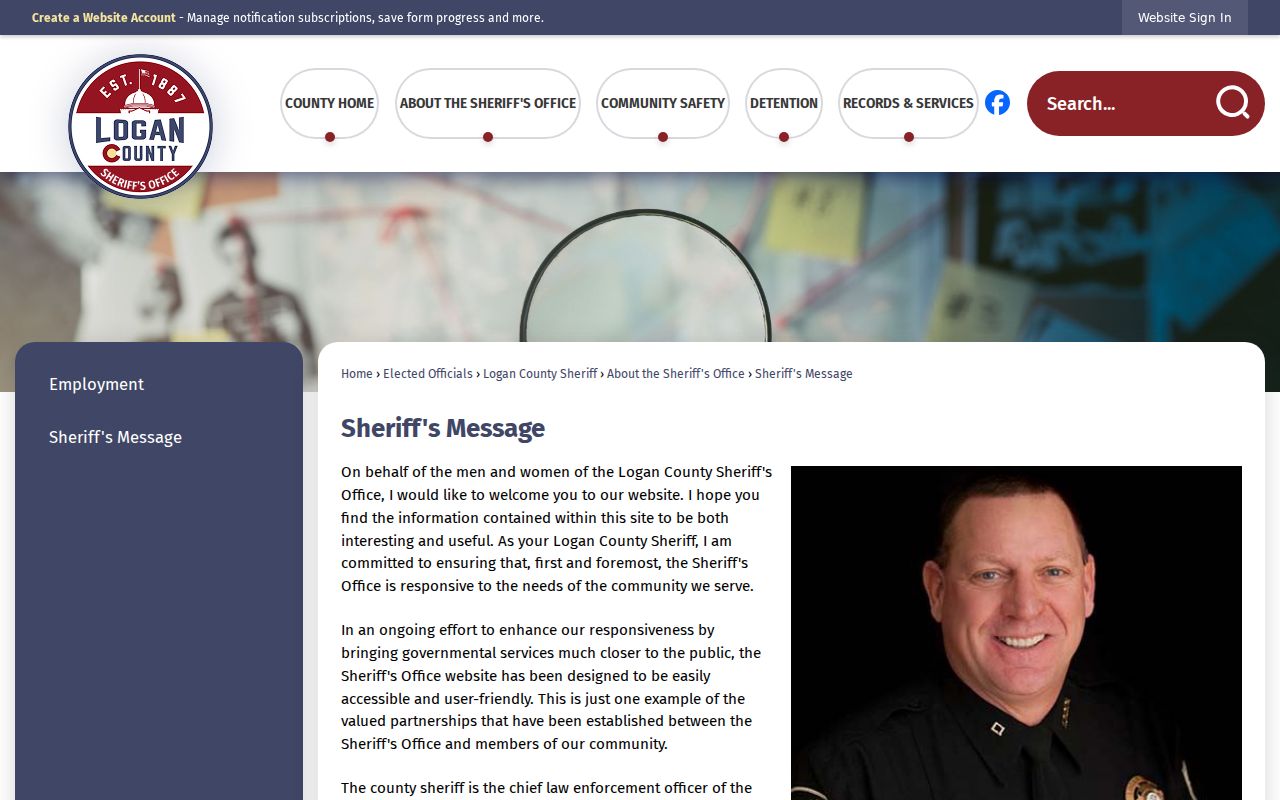
The image reinforces the correct route for county-handled Fleming incidents: verify the agency, then request its record rather than searching a nonexistent Fleming police portal.
Fleming Sheriff Report Requests
The Logan County Sheriff record request form asks for incident details, the searched person, requester information, delivery choice, fee acceptance, and special disclosures involving juveniles or victims. Send sheriff-record questions to records@logancosheriff.com or use the office at 110 N. Riverview Road, Room 116, Sterling. The main number is 970-522-2578.
The researched fee is a $15 prepaid search, with copies and labor charged when applicable. The form also addresses Colorado’s restriction on direct solicitation for pecuniary gain. Give the most exact details available, such as the Fleming location, event date, involved name, deputy or report number. Clear identifiers help the office distinguish a sheriff report from a town citation or a court file.
The county sheriff and records directory provided the image below.
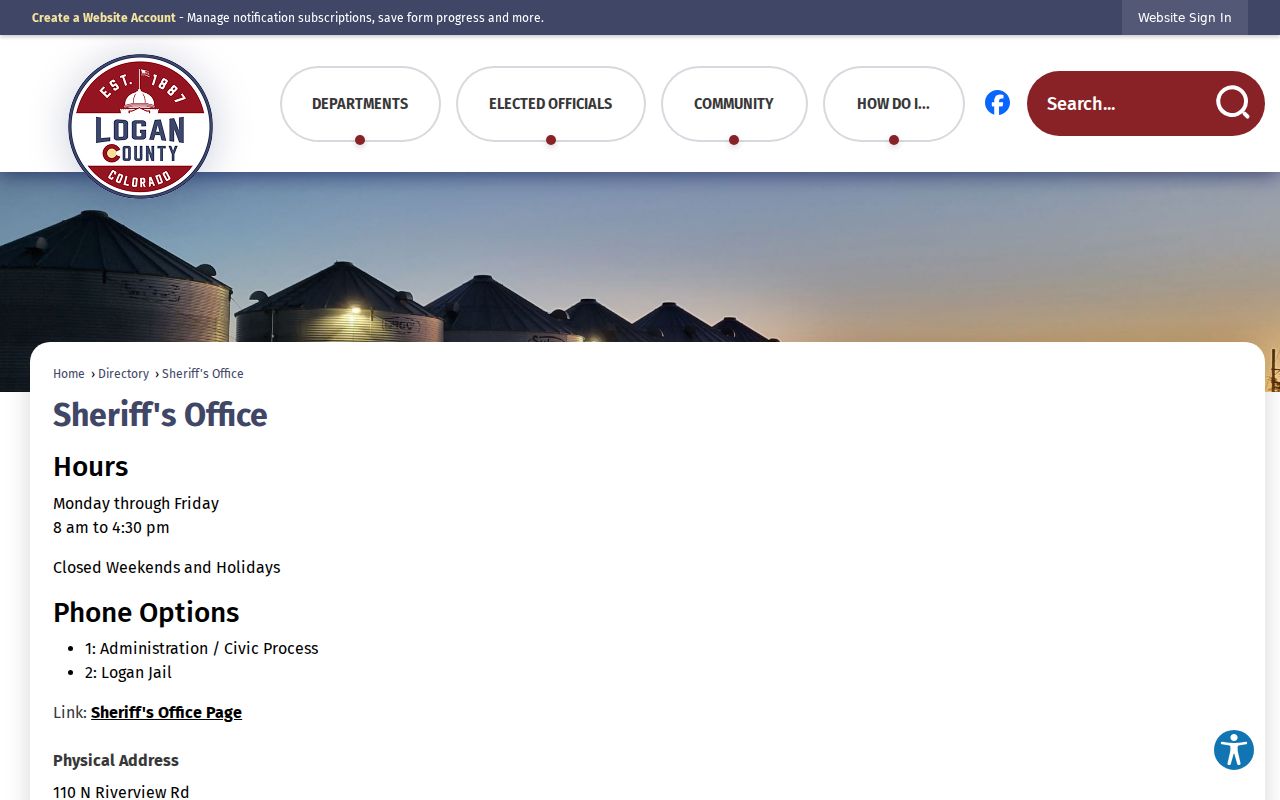
The directory route is valuable when a Fleming requester needs a human fallback instead of an online name database.
The Fleming Municipal Court File
The town site does not publish a verified Fleming municipal case-search portal, docket schedule, copy fee, or court counter in the inspected material. For an ordinance citation, begin with Town Hall and ask for the municipal court clerk or the current record custodian. Give the citation number, name on the citation, alleged ordinance, and approximate date. Ask whether the matter is municipal before using county court channels.
| Court Name | Fleming municipal or town court channel, verified through Town Hall before ordering |
|---|---|
| Case Types Heard | Town ordinance and municipal citation matters; confirm jurisdiction with the clerk |
| Case Lookup Channel | Town Hall routing by telephone, mail, fax, or current clerk instructions; no verified public portal |
| What the Docket Shows | Ask for citation, hearing, plea, order, disposition, and payment entries that are public |
| Copies & Fees | Request the current method and fee from the custodian; no verified Fleming schedule was found |
A state misdemeanor or felony is different. Those filings belong at Logan County Combined Courts, where County Court handles misdemeanors and preliminary matters and District Court handles felonies. The agency heading and court caption are the fastest clues to the right route.
Fleming Records in Rural Context
The 2020 Decennial Census counted 428 Fleming residents, making the town Logan County’s second-largest incorporated place in that uniform dataset. The figure is context, not a current estimate. It helps explain why direct telephone, email, mail, and counter routes matter more here than a dedicated local search product.
A small population does not mean that records vanish. It means they are distributed by function. Town documents stay with town custodians. Sheriff reports and jail bookings move through the county justice complex. Filed cases sit with the courts. Statewide fingerprint-supported cycles appear through CBI. A searcher gains more by following that chain than by assuming Fleming needs a full police portal of its own.
How Fleming Records Reach the County
A Fleming incident can create several records at different times. The responding agency writes the report. If custody follows, Logan County Jail opens a booking record and fingerprints may support a Colorado arrest cycle. A prosecutor decides whether and what to file. The clerk then records hearings, orders, disposition, and sentence. Each custodian releases only the material it controls.
Record flow: Fleming town or responding law enforcement › Logan County Courts › Colorado Bureau of Investigation
Use the recent source first. For a fresh sheriff response, request the sheriff narrative. For present custody, call the jail. For a filed case or final result, use Combined Courts. For statewide Colorado history, use the CBI Internet Criminal History Check System. ICHC costs $6 per search and requires an exact name and correct date of birth. It excludes warrants, sealed records, most juvenile records, and arrests not supported by fingerprints.
Fleming Criminal Records at CBI
CBI history can extend beyond a single Fleming report. Public ICHC organizes identity information and fingerprint-supported arrest cycles, including arrest date, agency, charges, associated court outcome, sentence, and later correctional information when reported. It does not contain every narrative, document, warrant, or local booking update. A common-name match is not positive identification.
- Arrest cycle
- A fingerprint-supported repository group that begins with an arrest and may later receive disposition data.
- Disposition
- The outcome of a charge, such as conviction, dismissal, or acquittal.
- Register of Actions
- The court’s dated index of filings and events, not the full document set.
- Sealing
- Colorado’s main adult remedy that restricts ordinary public access to an eligible criminal record.
When a Fleming record appears wrong, compare the agency report, court outcome, and CBI cycle. The submitting agency or court may need to verify the correction before a new state search reflects it.
Fleming Record Access Rules
Colorado’s criminal-record framework distinguishes records of official action from other criminal-justice material. Basic official actions such as an arrest, indictment, filed information, disposition, release decision, or probation decision must be open. Investigative narratives and evidence may be released at the custodian’s discretion after privacy, safety, and investigative concerns are weighed. Juvenile, sealed, victim-sensitive, and active-investigation material can be withheld or redacted.
Key Statutes:
Colorado Criminal Justice Records Act, CRS 24-72-301 et seq. governs access to criminal-justice records and separates mandatory official-action access from discretionary material.
CRS 24-72-302(7) defines records of official action, including arrest, charging, disposition, and specified release or supervision decisions.
CRS 24-72-305.5 requires the no-direct-solicitation affirmation used in criminal-justice record requests.
CORA governs many other town records, while CCJRA more specifically controls criminal-justice files. Fleming requesters should name the record, date, person, and likely custodian. If access is denied or limited, ask the office to identify the ground and whether a redacted public copy can be released.
Fleming Record Fallback Routes
When a Fleming page or link does not answer the question, move through the verified fallbacks. Call Town Hall for municipal routing. Email or visit the Sheriff’s records office for county-created reports. Use jail option 2 for custody. Ask Combined Courts for the filed case. Use CBI only for its statewide fingerprint-supported product. This order keeps each request narrow and makes a useful response more likely.
Do not assume that an empty online search means no record exists. A case may be municipal, not yet filed, sealed, outside the chosen court index, or held only by the originating agency. Verify names with date of birth or case number, and read an arrest as an allegation unless the court disposition shows a conviction.
Note: Fleming’s official app and alerts serve town communications, but no source supports calling either one a criminal-record lookup.